
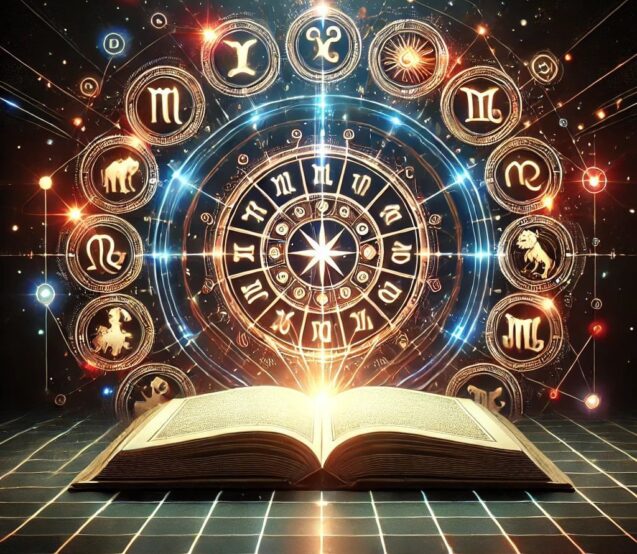
Horoscope
“The horoscope does not create destiny; it reveals the destiny created by our own actions across lifetimes.”
Horoscope and Astrology in Indian Culture
A Traditional Perspective by Pandith Sai Swaroop Deekshith
Introduction: Astrology as a Sacred Science in Indian Civilization
Astrology, known in India as Jyotisha Shastra, is not merely a system of prediction but a sacred Vedanga, a limb of the Vedas, deeply rooted in Indian culture, philosophy, and spiritual life. For thousands of years, Indian society has relied upon astrology to understand the rhythm of life, the influence of celestial bodies, and the karmic blueprint carried by every individual from birth.
According to Pandith Sai Swaroop Deekshith, astrology is the divine bridge between the macrocosm (Brahmanda) and the microcosm (Pindanda)—the universe and the human being. The horoscope or Janma Kundali acts as a cosmic map that reveals an individual’s past karma, present tendencies, and future possibilities.
Indian astrology does not claim to change destiny arbitrarily; rather, it teaches how right knowledge, remedies, and righteous living can harmonize one’s life with cosmic laws.
Meaning and Significance of Horoscope (Janma Kundali)
A horoscope is the astrological chart prepared at the exact time, date, and place of birth of a person. In Sanskrit, it is known as Janma Kundali or Jataka Chakra. This chart captures the planetary positions in the twelve zodiac signs (Rashis) and twelve houses (Bhavas) at the moment of birth.
Pandith Sai Swaroop Deekshith explains that the horoscope is:
- A mirror of one’s karma
- A spiritual document of the soul’s journey
- A guidance tool for righteous living (Dharma)
Every planet represents a specific energy, deity, and psychological force. Their placement in the horoscope reflects how those energies manifest in an individual’s life.
Origins of Astrology in Indian Tradition
Indian astrology finds its origins in the Vedic period, particularly in texts like:
- Rig Veda
- Atharva Veda
- Vedanga Jyotisha
- Brihat Parashara Hora Shastra
- Surya Siddhanta
- Jataka Parijata
These texts establish astrology as a divine science revealed to sages (Rishis) through meditation and tapasya.
According to Pandith Sai Swaroop Deekshith, ancient Indian astrologers were not fortune tellers but spiritual scientists who studied planetary movements to understand cosmic order (Rta).
The Philosophical Foundation: Karma and Rebirth
At the heart of Indian horoscope astrology lies the concept of Karma and Reincarnation.
Pandith Sai Swaroop Deekshith emphasizes:
“The horoscope does not create destiny; it reveals the destiny created by our own actions across lifetimes.”
There are three types of karma reflected in a horoscope:
- Sanchita Karma – Accumulated karma from past lives
- Prarabdha Karma – Karma destined to be experienced in the present life
- Kriyamana Karma – Actions performed in the current life
The horoscope primarily reveals Prarabdha Karma, which can be softened or transformed through remedies, devotion, and ethical living.
Structure of the Horoscope
1. The Twelve Rashis (Zodiac Signs)
Indian astrology uses the Sidereal Zodiac, aligned with fixed stars. The twelve Rashis are:
- Mesha (Aries)
- Vrishabha (Taurus)
- Mithuna (Gemini)
- Karka (Cancer)
- Simha (Leo)
- Kanya (Virgo)
- Tula (Libra)
- Vrischika (Scorpio)
- Dhanu (Sagittarius)
- Makara (Capricorn)
- Kumbha (Aquarius)
- Meena (Pisces)
Each Rashi governs personality traits, tendencies, and life themes.
2. The Nine Planets (Navagrahas)
The Navagrahas play a central role in Indian astrology:
- Surya (Sun) – Soul, authority, vitality
- Chandra (Moon) – Mind, emotions
- Mangala (Mars) – Energy, courage
- Budha (Mercury) – Intelligence, communication
- Guru (Jupiter) – Wisdom, prosperity
- Shukra (Venus) – Love, luxury
- Shani (Saturn) – Discipline, karma
- Rahu – Desires, illusion
- Ketu – Detachment, spirituality
Pandith Sai Swaroop Deekshith states that planets are not malefic or benefic by nature, but act as karmic teachers.
3. The Twelve Houses (Bhavas)
Each house governs a specific area of life, such as:
- 1st House – Self, body
- 2nd House – Wealth, family
- 7th House – Marriage, partnerships
- 10th House – Career, karma
- 12th House – Moksha, liberation
The interaction between planets, signs, and houses determines life outcomes.
Horoscope Matching and Marriage in Indian Culture
Marriage is considered a sacred samskara in Indian tradition. Horoscope matching (Kundali Milan) is performed to ensure harmony between partners.
Pandith Sai Swaroop Deekshith explains that matching is done not merely for wealth or status, but for:
- Emotional compatibility
- Health and longevity
- Progeny (Santana)
- Spiritual alignment
The Ashta Koota system (36 points) is widely followed, along with analysis of:
- Mangala Dosha
- Nadi Dosha
- Bhakoot Dosha
Proper remedies can neutralize many doshas when guided by an experienced astrologer.
Role of Astrology in Daily Life
In Indian culture, astrology influences important decisions such as:
- Naming ceremonies
- Education
- Marriage
- Business ventures
- House construction (Griha Pravesh)
- Travel
- Spiritual initiation
Pandith Sai Swaroop Deekshith stresses that astrology should be used as guidance, not dependency.
Dasha System: Timing of Events
One of the most powerful features of Indian astrology is the Vimshottari Dasha system, which divides life into planetary periods.
Each Dasha reveals:
- Rise and fall in career
- Relationship experiences
- Health patterns
- Spiritual growth
According to Pandith Sai Swaroop Deekshith, time is the key—a good planet gives results only in its Dasha, and a difficult period eventually passes.
Astrology and Spiritual Growth
Indian astrology is deeply connected with spiritual evolution.
- Jupiter and Ketu indicate spiritual maturity
- The 9th and 12th houses represent Dharma and Moksha
- Afflicted planets indicate lessons, not punishment
Astrology ultimately guides a person toward self-realization.
Remedies in Indian Astrology
Astrological remedies aim to balance planetary energies, not oppose fate. Common remedies include:
- Mantra chanting
- Temple worship
- Charity (Daan)
- Fasting (Vrata)
- Yantras
- Gemstones (with caution)
Pandith Sai Swaroop Deekshith emphasizes that faith and intention are more powerful than mechanical remedies.
Ethical Practice of Astrology
True astrology requires:
- Deep knowledge of scriptures
- Moral responsibility
- Compassion for people
- No fear-mongering
Pandith Sai Swaroop Deekshith advocates astrology as a service to society, not a business of fear.
Relevance of Astrology in Modern Times
Even in the modern scientific era, astrology remains relevant because:
- Human life still follows natural rhythms
- Psychological patterns align with planetary cycles
- Spiritual hunger continues
Astrology, when practiced ethically, complements modern life by offering inner clarity and direction.
Conclusion: Astrology as a Path of Awareness
In Indian culture, astrology is not about predicting misfortune but about understanding life’s purpose. The horoscope is a spiritual compass, guiding individuals through challenges and opportunities.
As explained by Pandith Sai Swaroop Deekshith, astrology teaches us to:
- Accept responsibility for our actions
- Align with cosmic order
- Grow spiritually while living materially
Ultimately, astrology leads a person not just to success, but to wisdom, peace, and self-awareness.